The story of one traveler: Adventures from ticket purchase all the way to safe arrival home
Showing posts with label photos. Show all posts
Saturday, July 28, 2012
Sunday, July 8, 2012
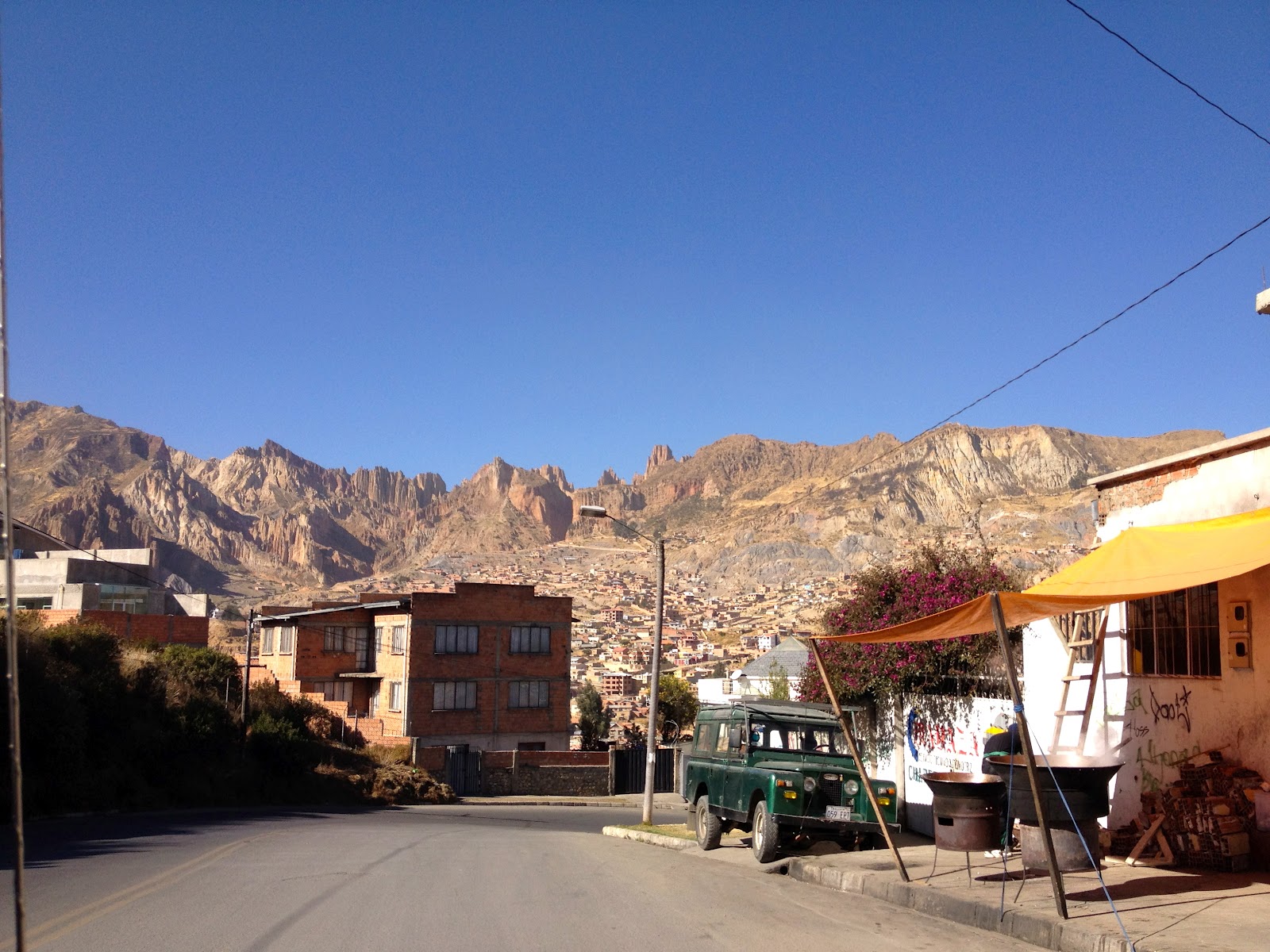
Day 7: Pictures from the Mountains
Enjoying life in La Paz. Here are some pictures of the mountains. This post is short because it is being written from my iPhone from wifi. Sorry about that!
Location:
Calacoto Distrito Sur
Thursday, July 5, 2012
Day 6: Fourth of July & Movie Searching
Happy Fourth of July! Sadly, in Bolivia there was not much celebrationfor this American holiday. There were, however, fireworks in the early eveningwhen the sun set. Didn’t get any pictures, but the fireworks were very nice. Ithink I even saw some Roman Candles and other fireworks that are illegal in the U.S.
Today, we went to buy some movies at local stores. Movieshere are very cheap. A DVD costs 10 Bolivianos ($1.44) and a Blu Ray costs 20Bs. ($2.87). This is what one of the stores we went to looks like. The DVDs andBlu Ray discs aren’t in such great condition, so you can ask for them to betested out. In the picture, that is why there is a TV at the store. They haveall sorts of movies, old ones and new ones alike. All though all movies havetitles in Spanish, they almost always come in English as well. Every once in awhile, a movie you test out is recorded illegally in a movie theater. Thequality is so poor that you don’t want to buy the movie. It’s pirated movieslike that, that probably explain why the costs are so low for the movies. Allof the movies I bought are good quality; although, some discs might be copies.I’ll never know.
Day 4-6: Food Compilation
In the past 3 days, we have eaten delicious Bolivian food.This post contains information from all 3 days-- pictures will be posted tomorrow 7/6/12
On July 2 (Day 4), we ate salteñas from one of the best placesin the city. Salteñas are difficult to describe, and the pictures I took don’t dothem justice. It is sweet dough that is wrapped up and curled on the top.Inside the dough is a stew. The stew contains hardboiled egg, a black olive,peas, potatoes, and the meat of your choice. You can choose whether to have a salteñade pollo or una salteña de carne (chicken salteña, or a beef salteña).They are both delicious, but they look identical from the outside. I prefer thesalteñade carne. Two salteñas make a good meal. Each salteña only costs 4.5 Bolivianos, or about$0.65.
On July 3 (Day 5), my grandparents made us this Bolivianmeal called “Ranga.” Rango is mainly composed of cow stomach, boiled with bayleaf and garlic and then sliced into thin pieces. It is then mixed with ayellow chili sauce. It is served with white potatoes, and onions and tomatoes(salsa). I don’t like the texture that the cow stomach has, so my grandma mademe an alternative Bolivian dish, “Revuelta.” Revuelta is simply scrambled eggwith beef, peas, and potatoes. I didn’t take a picture of this revuelta, but Iwill be able to take another picture of the meal later.
Today, July 4 (Day 6), my grandparents made us a Bolivian dish,“Estofado de carne.” It is basically a beef stew. Since the cows eat differentfood in Bolivia than in the United States, the meat tastes much different thanthe meat in the U.S. Strangely, the meat tastes much better here. The meat issliced into thin strips, and cooked with onions, tomatoes, onions, and atraditional chili pepper. It is served with parsley and rice. Delicious!
Monday, July 2, 2012
Day 2: Day on the Town- The Traditional Market
The traditional supermarket where you buy all of your groceries
doesn’t apply in Bolivia, unless you want to pay premium prices for the same
products. My grandparents aren’t, so Saturday morning we ventured out to one of
the many markets in the city. Called, “El Mercado,” this traditional method of
buying vegetables, fruits, and meats is quite fascinating. While I have seen
markets like these on TV, seeing them in person is such a unique experience
where I have to find myself constantly ducking to avoid hitting my head on the
exposed nails and electrical wires holding up the roof of the large room/ shack
where El Mercado is. The first picture I took of El Mercado features mi papito
signaling my mamita to come see specific fruits. As you can see in the
background, there are all sorts of vendors along a narrow dirt path. After a
couple of vendors, you find a big open shack/ room where natives come to sell
their fruits and vegetables they have acquired from Las Yungas, or a nearby
tropical area where fruits and vegetables are able to grow. None of the fruits
and vegetables you buy at the market are farmed commercially, and you can tell.
These fruits and veges are bruised and have all sorts of marks on them.
However, these fruits and vegetables are organic and ripen naturally- and you
can taste that! The tropic zone, Las Yungas, is so perfect for farming that the
fruits and vegetables come out HUGE in size. From the pictures I am posting
here, you can see that there are all sorts of vegetables, some that we are
familiar with, and some not so much. I found myself asking my mom and mis
papitos many times what certain fruits/ vegetables are. A couple vendors
allowed us to take pictures of them selling their products, so they are also
posted here. The contents of this bag shown only cost $7 American dollars, or
about 50 Bolivianos.
Mis papitos visit the same vendors every time they go
grocery shopping. That way, the people you get to know give you discounts and
are nicer to you. Even if you can’t get a discount, you can be sure you aren’t
getting ripped off if you see the same vendors.
Milk is also consumed differently. Milk is sold in bags and
not cartons. It is quite interesting! You cannot buy a carton, because they
aren’t sold anywhere. They have all sorts of sizes of bags, and you can buy a
variety of flavors of milk. We bough a couple bags of “Leche de Frutilla” or
strawberry milk. If you would like to drink it without a cup, which you very
well can and many do, you simply nibble off a corner of the bag and drink from
the bag. It’s actually more fun than drinking from a glass, and the milk is
healthier. You can also buy soy milk this way.
Groceries are a unique aspect of Bolivia, whether you buy
them at an American style grocery store, or en el mercado.
![]() |
| My grandpa signaling my grandma |
Location:
Nataniel Aguirre 927, La Paz, Bolivia
Day 1: Safe Travels
We have safely arrived in Bolivia! After a 2 hour flight to
Miami, a 1 hour layover, then a 6 hour 40 minute flight into La Paz, and some
altitude sickness, the adventure has begun! At 13,300 feet, the altitude at El
Alto airport in La Paz Bolivia can be very difficult to adjust to. Once the
airplane doors opened and the pressurized cabin adjusted to the air pressure of
the city, my mom and I quickly felt the altitude. The altitude brings
headaches, rapid heartbeat, dizziness, among other things. Each individual’s
reaction to the altitude varies. Some people don’t even experience any sort of
altitude sickness. Regardless, when you exit the aircraft you find paramedics
waiting with oxygen. Needless to say, we did not need any.
![]() |
| Miami airport: At the gate waiting for our flight |
![]() |
| Coca Tea- You can't see the leafs in the water |
When we arrived to my papitos neuva apartamento
(grandparents new apartment), we had some Coca Tea. The Coca leaf is a leave
that is almost sacred in Bolivia and other South American countries. Used as
medicine, the coca leaf provides relief for all sorts of things, including
altitude sickness. That’s why we drank it. As you can see in the picture, the
coca leaf is placed in hot water, and sugar is added. To the average American,
it looks like a bunch of leafs in hot water, but it actually provides much
needed relief for the altitude. Other uses of coca tea include stomachache and
headache. I know what you are thinking, coca leaf… cocaine. While the coca leaf
is used to make cocaine, so are many other chemicals that we do not have, nor
want. It is perfectly safe to drink in hot water, or even chew. There is no
“high” associated with the leaf itself. It’s the leaf when combined with
chemicals and all sorts of other bad things.
Because of the altitude, my mom and I felt very tired. So
tired to the point where we slept after having coca tea and bread (desayuno-
breakfast), woke up for lunch (a soup with chicken and potatoes… no picture of
this meal, sorry), slept, and then woke up for “cena” or a light evening tea.
Bolivians are used to this meal schedule of light breakfast, heavy lunch, and
light dinner. The high altitude can cause indigestion, which can make it
difficult to eat big meals.
Since I don’t have a stable Internet connection, I will be
blogging these posts irregularly. While I am writing daily, I cannot post
daily. So, when I have Internet I will post all of the posts I have written.
Location:
Nataniel Aguirre 927, La Paz, Bolivia
Tuesday, January 31, 2012
Snow-Topped Mountains
This is Mt. Illimani (pronounced e-you-man-e). It dominates the landscape in the La Paz, Bolivia. Mt. Illimani is the highest mountain in the Cordillera Real, in the Andes Mountains. It is the second highest mountain in South America. Pretty cool, huh?
I took this picture back in 2007 at my Aunt's house in the city. This mountain is known for always having a layer of snow on the top.
Mt. Illimani stands at 21,122 ft. Isn't that crazy?
Subscribe to:
Posts (Atom)